
Sarah Knuppel and her colleagues didn’t know if the man would survive.

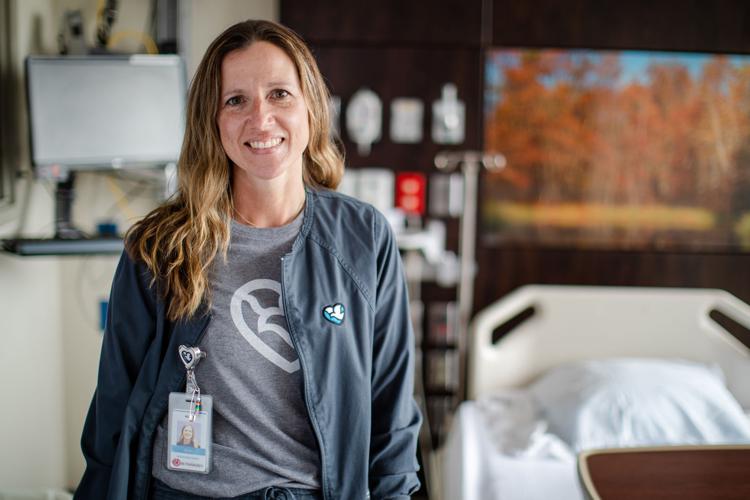
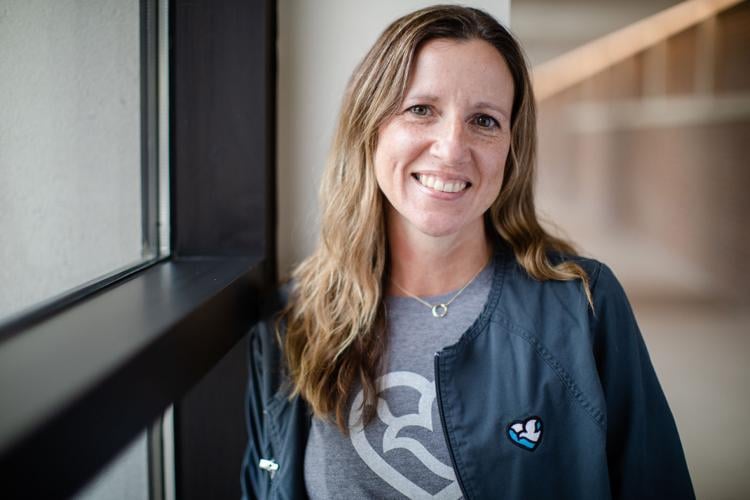
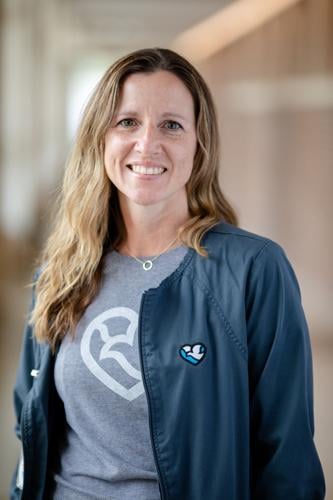
27 April 2021 – Fremont Nurses Honored – Photo of Sarah Knuppel, RN, at Methodist Fremont Health honored in the Fremont Tribune. PHOTO by Daniel Johnson/Methodist Health System
He was so very sick.
But he had an incredible will to live.
Knuppel is a registered nurse who works in the intensive care unit at Methodist Fremont Health.
Nurses like Knuppel have been on the frontlines in the fierce battle that is the COVID-19 pandemic.
An ICU nurse for about 20 years, Knuppel recalls the high-acuity patients in that unit during the pandemic’s early months. She took care of very sick patients, while communicating with loved ones who couldn’t see them.
Her work hasn’t gone unnoticed.
Knuppel is among local nurses nominated by a community member and who then received enough readers’ votes to be featured in a story as part of National Nurses Week.
People are also reading…
She and other nurses are being honored for going above and beyond and putting others first.
Looking back, Knuppel recalls that she always loved taking care of people and animals.
“I always had that real interest in science like biology and anatomy,” she added.
She joined the nursing program at Midland University and took Certified Nursing Assistant (CNA) classes.
Knuppel was a college senior when she began working at what’s now Methodist Fremont Health. Knuppel graduated from nursing school in 1998. She started working on the medical-surgical floor and, after two or three years, took classes to work in the ICU.
The pandemic would prove to be the most challenging part of her nursing career.
“In the beginning of the pandemic, we were taking care of many acutely ill patients, more than we’d ever cared for,” she said.
The work was hard physically and emotionally.
Knuppel always had a heart for taking care of the sickest patients.
“This was a whole other level of things we’d never seen before so we had to figure it out,” she said.
For instance, nurses learned that putting patients on their stomachs helped them breathe better.
In those early times — with so many unknowns — medical professionals also feared bringing the virus home to their own families.
And one of the hardest parts has been families not being able to be there when their loved ones are so sick.
“You have to talk to them on the phone or some Facetime their family, but otherwise you’re giving an update on the phone and I can’t imagine how difficult that would be to be on the other end, sitting at home, feeling helpless,” she said.
Throughout the years, Knuppel believes one of the best parts about her job has been getting to know patients and learning about their lives. She’s enjoyed hearing about what they did for a job and their life experiences.
“You learn a lot of fun stories,” she said.
When patients aren’t allowed visitors and have lots of alone time, the nurse is the one they talk to if they want to get something off their chest or tell a joke or talk about their life.
That’s rewarding.
One of the most rewarding parts of her job has been the great friends she’s made during her years at the hospital.
During the pandemic, nurses coped by relying on each other.
“After we’d get home, we’d call each other and talk about our day and do a little decompressing and motivating each other,” she said.
She’s appreciated the camaraderie.
“There was a lot of teamwork,” she said. “It felt good to be part of team and everybody knew their responsibility.”
If she hadn’t become a nurse, Knuppel might have become a professional organizer. Or she might like running a drive-through coffee shop.
“Coffee is so important to people and it makes people happy,” she said.
Yet Knuppel is glad she chose nursing.
“You get to be in a position that not very many people get to be in — seeing people at their worst or their best,” she said. “It’s rewarding to take care of somebody multiple days in a row and see them get better. Sometimes, they don’t get better and it’s being able to keep them comfortable and supporting the family in times of death and dying.”
She recalls a very tender time during the pandemic.
“We took care of a gentleman during the pandemic, who was very, very ill and we didn’t know if he was going to make it out of the hospital or not, but he had this internal drive in him — that he was going to do everything he could to get better,” she said. “I think if we would have asked him to stand on his head, I know he would have done it.
“We had him lying on his belly,” she continued. “We had him doing so many things and he got better.”
She remembers the day he left the hospital.
“He left in a wheelchair to go home with his wife and he gave us all great big hugs,” she said. “He was crying and we were crying and he was so grateful to us, but I remember telling him that he was the one who did all the work. We just helped. He did all the hard work — everything we asked and more.”
Knuppel noted something else.
“You spend a lot of time with people,” she said. “It’s hard not to become close to them.”

We’re excited to honor extraordinary nurses in our area. In unprecedented times and with the added strain of COVID, we celebrate nurses who pu…