Want to see some of Nebraska’s archives up close? Come check out the Nebraska History Museum. Archives play an important role in interpreting our history, and quite a few records from our archival collections are on display in our exhibits. Most recently, we pulled original materials for the Our Nebraska exhibit, which celebrates how Nebraskans have made an impact on our state, our nation, and beyond. Curators dug into primary sources like documents, maps and photos to help tell these stories. Here are just a few highlights:
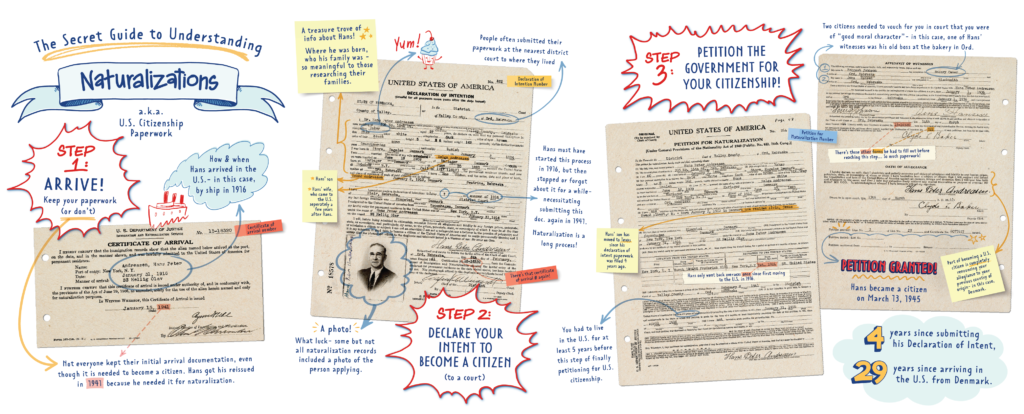
Many of today’s Nebraskans are descendants of people who moved here from all over the country and the world. One way to dive into your family history is by exploring government records such as naturalization documents. They can contain information about the people who immigrated here, including early settlers whose influence helped shape the places we call home today.
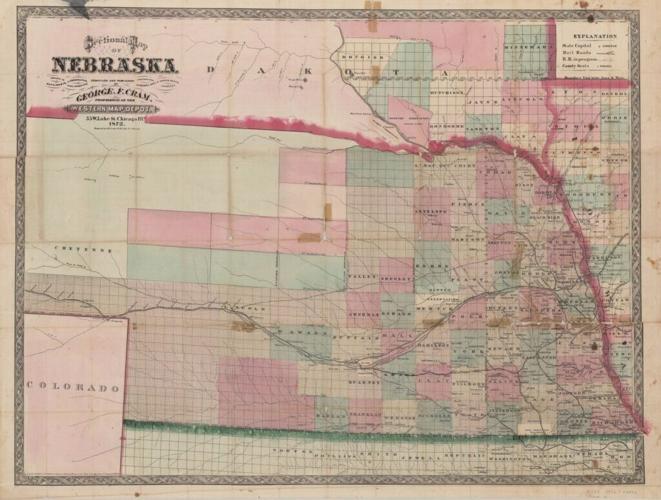
Maps can show us how Nebraska has evolved. This sectional map from 1872 illustrates how new towns were created to support the railroad as settlement expanded westward. Burlington engineer Thomas Doane named a series of towns in alphabetical order. Starting with Crete, follow the map’s line to Dorchester, Exeter, Fairmont, Grafton, Harvard, Inland, Juniata, Kenesaw and Lowell.
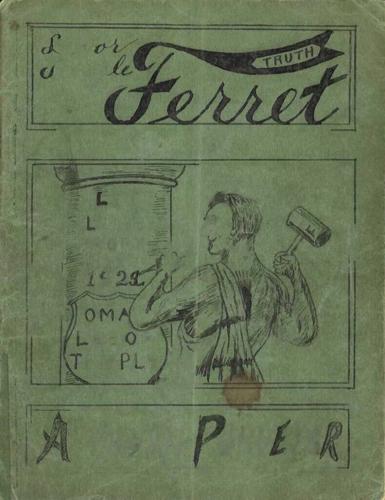
Nebraskans have been coming together to improve their communities for generations, and organizational records capture some of that action. In the late 1800s, the Nebraska Farmers’ Alliance worked across the state to fight for rural economies. The Nebraska Farmers Union, Nebraska Farm Workers Association and labor unions protected farmers’ and workers’ rights. Publications like the Ferret labor newsletter helped spread the word.
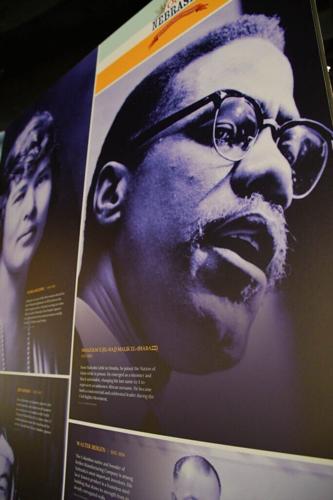
Notable Nebraskans are found everywhere in the state and have made change big and small. We have taken care to preserve their likenesses in our photograph and audiovisual collections. We have collected photos and moving images ranging from historical figures such as George Norris and Dr. Susan La Flesche Picotte to more recent figures such as Malcolm X and Bob Gibson. We continue to add to our collection, documenting the Nebraskans of today as you all continue to make an impact.
This content is sourced from
Nebraska State Historical Society
. It reflects the author's views and has not been edited by our newsroom. It may have been generated using AI assistance.