


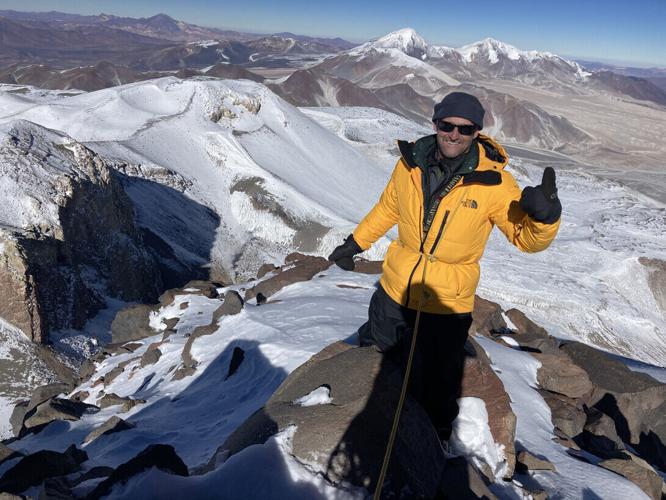
Even for elite mountain climbers, reaching the summits of the Central Andes is an arduous undertaking. Atop these peaks — some of which reach elevations of almost 7,000 meters — it is a perennial winter, with temperatures rarely rising above freezing. The air contains less than half the oxygen available at sea level.
“Really well-trained mountain climbers who have gone through the proper acclimatization can tolerate these elevations for a short period of time, like during a one-day summit attempt,” said Jay Storz, Willa Cather Professor of biological sciences at the University of Nebraska–Lincoln. “But those elevations are well in excess of what humans can tolerate over the long term.”
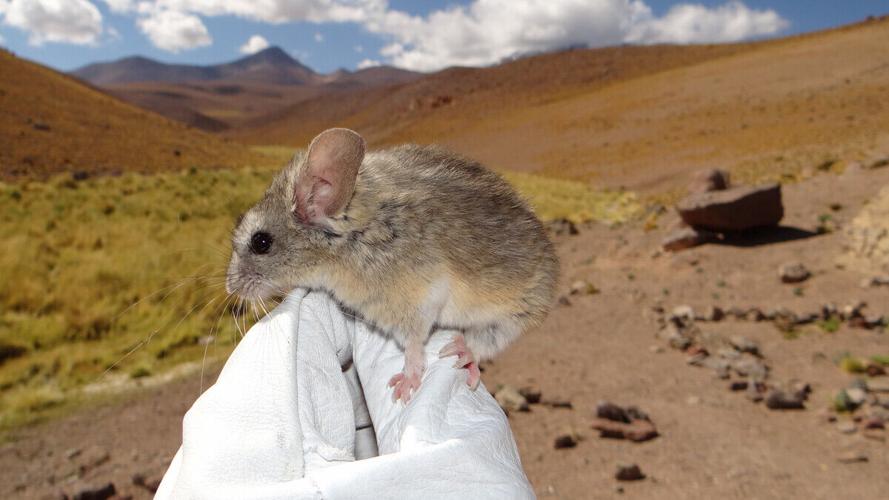
That is why Storz — himself a longtime mountaineer — was shocked when his team discovered in 2020 that a tiny animal — Phyllotis vaccarum, also known as the Andean leaf-eared mouse — makes its home at these heights, a feat previously considered impossible for mammals. In a new study published in Science, Storz and a team of international collaborators illuminate the biological secrets that enable these mice to thrive at the highest elevations of any known mammal.
People are also reading…
Through a series of physiological experiments and genetic analyses, Storz’s team pinpointed physiological traits and genetic variations that fortify the mice against this extreme environment. The findings — which relate to the animals’ cardiovascular function and muscle metabolism — provide new evidence about the set of traits that equip animals for life in extreme, low-oxygen conditions.
“Here is a great case where we have a mammal that lives way, way higher than anything we know,” Storz said. “Whatever special traits those mice have evolved has to be pretty informative about what it takes to survive and function in conditions of severe hypoxia.”
The team includes co-first author Naim Bautista, a former postdoctoral associate in the Storz laboratory, along with international researchers from three Chilean institutions: Universidad de Chile, where all the physiological experiments were conducted; Universidad Austral de Chile; and Universidad San Sebastián. Additional collaborators were from McMaster University in Canada and the University of Montana.
The engine of adaptation
In addition to being the highest-dwelling mammal, P. vaccarum also has the broadest elevational range of any mammal, with populations found from the mountain summits all the way to sea level. This vast distribution across distinct environments enabled Storz’s team to look for local adaptations: the genetic and physiological differences a population has evolved to inhabit a particular setting.
Between 2020 and 2023, Storz’s team collected mice during five extreme high-elevation expeditions in the Central Andes, in addition to sampling at low- and mid-elevation sites. They transported the mice to the University of Chile, where they were subjected to a “hypoxic cold challenge,” which tests an animal’s ability to maintain its body temperature in conditions of extreme cold and oxygen deprivation. The researchers compared this ability — called thermogenic capacity — in mice collected from high- and low-elevation extremes of the species’ distribution.
“What we discovered is that the highland natives do, in fact, have a higher aerobic capacity in an environment where there is a reduced availability of oxygen,” Storz said. “In comparison with the low elevation mice, there clearly is an evolved difference in the physiological performance between the highlanders and the lowlanders.”
This improved physiological performance is partly due to an increased mitochondrial respiratory capacity in skeletal muscle, which plays an important role in generating heat via shivering.
This enhanced capacity was reflected in the team’s analysis of P. vaccarum’s genome — its complete set of DNA. The highland and lowland mice are remarkably similar genetically, making it easier to detect the relatively small number of genetic changes that were favored by natural selection only in the highlanders. Storz’s team identified differences in genes tied to breaking down and processing long-chain fatty acids, which partially explains how the highland mice survive at extreme elevations: an increased capacity to generate heat by burning fat under oxygen-limited conditions.
Storz said the extent of this local adaptation in P. vaccarum is surprising given the close physical proximity and frequent interbreeding among the different populations. Normally, this gene flow would wash out local adaptations. But in some cases, like with P. vaccarum, specialized traits emerge in response to very strong selection pressure — like the need to adapt to life on a volcanic summit.
An unexpected discovery: Metabolizing a toxic diet
The genomic analysis also revealed an unexpected dimension of local adaptation related to the mice’s diet and metabolism. In desert environments like the Central Andes, plants are typically loaded with toxic chemicals as a defense against herbivorous animals. The team’s genomic analysis revealed changes in genes involved in detoxifying these compounds.
“In addition to adapting to low oxygen and extreme cold, it turns out that the mice living at different elevational zones are also adapting to be able to feed on the plants specific to those zones,” he said. “It’s a nice reminder that the things animals have to deal with are a lot more multidimensional than we often suppose.”
Lessons for human health
Though Storz’s focus is on basic research related to evolutionary biology, his work has potential applications in human health and medicine. Many diseases, like heart and lung conditions, stem from insufficient oxygen reaching the tissues or organs — one of the reasons the National Institutes of Health funded this work.
“If we look at high-altitude animals that have solved the problem of surviving under very low oxygen conditions, the evolved changes in their physiology can suggest which types of interventions could be beneficial to patients who are suffering from hypoxia that stems from cardiorespiratory disease,” he said.
The National Science Foundation and National Geographic Society also funded the work.


